Material notes
Copper patina: how appearance changes over time
Exposed copper changes appearance as its surface reacts with the surrounding environment. Bright copper can develop brown tones and, under suitable conditions, a green or blue-green patina. The colour and rate of change depend on exposure and the finish, so there is no single timetable for a copper shopfront.
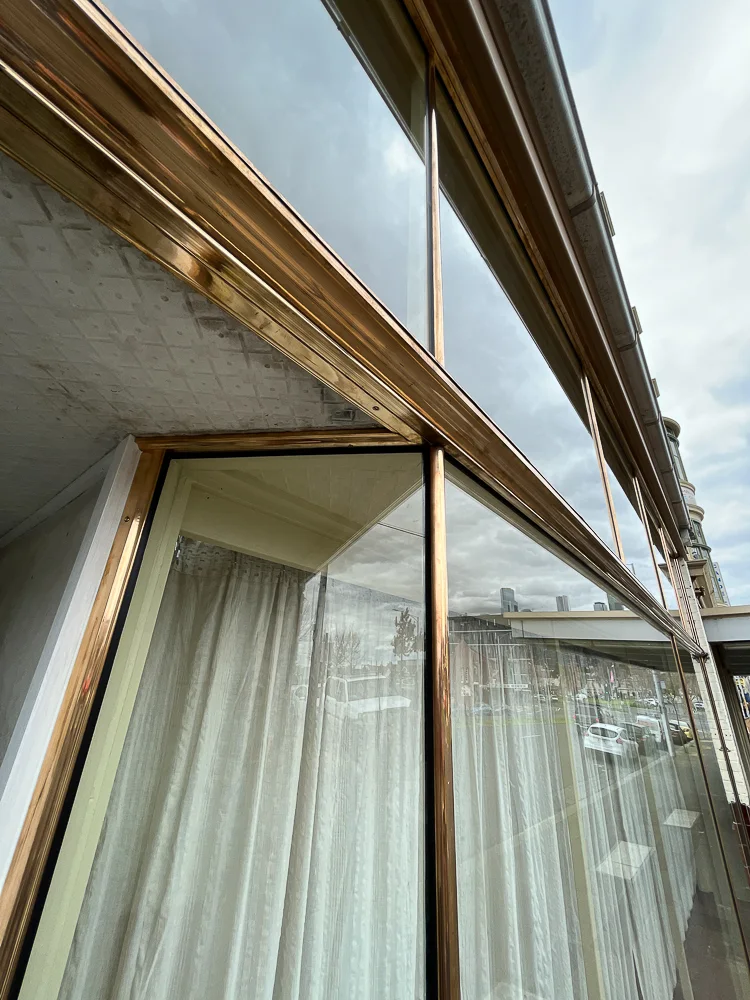
For a design project, the useful question is not simply “What colour is copper?” It is “What appearance are we selecting at the start, and how do we expect to live with it as it changes?”
Why does copper change colour?
Oxidation is part of the natural behaviour of exposed copper. In its description of mill-finish architectural copper, manufacturer Aurubis explains that the bright surface darkens through brown shades and can develop green or blue patination with continued weathering. That is a description of material behaviour, not a finish schedule for every building. Aurubis: Nordic Standard
The copper visible in an older reference photograph may therefore look quite different from newly supplied material. Before using that photograph as a specification, establish what you are responding to: the starting colour, the darker tonal range or the overall relationship with neighbouring materials.
Why is there no fixed patina timetable?
Weathering is affected by the local environment. Aurubis identifies factors including humidity, surrounding activity, proximity to water and orientation, and notes that different facade sides can develop differently. Its guidance also cautions that older samples do not guarantee the same result on another project. Aurubis: natural weathering guidance
For a Melbourne shopfront, record the actual situation in the brief: where the copper sits, which direction it faces and whether parts of the assembly are sheltered. Those observations give the project team a better basis for discussing appearance than a generic weathering chart.
Do not use a reference image to set a deadline for a particular shade. Instead, agree which qualities matter to the design and which variations are acceptable.
Specify the starting appearance clearly
Separate your preferences into three parts: the appearance you want on completion, the changes you are comfortable with, and the elements that need to sit together visually.
For example, a brief might ask for a warm copper presence beside a particular stone or painted surface, with natural variation accepted. Another project might place more emphasis on consistency at a prominent entrance. Neither description identifies a product by itself, but both give the finish discussion a clear purpose.
Ask what finish options and representative material information are available for the proposed windows or mouldings. CW&M’s published profile range does not establish that every treatment or finish is available.
Use samples and photographs thoughtfully
If a representative sample is available, consider it alongside the actual neighbouring materials and in the light where the detail will be seen. Record what the sample represents, including any stated surface treatment.
Label your reference images too. Note whether an image shows new material, an existing installation or simply a colour preference. Keep that distinction in the project notes so the team is not comparing different stages of copper’s appearance as though they were the same finish.
The photographs on this website show details of one shopfront. They are useful visual references, but they are not a controlled sequence of patina developing over time.
Agree the care approach before handover
Ask for care guidance for the specific supplied surface. A coating or other treatment can alter the way copper changes, and cleaning products may affect its appearance. Manufacturer guidance should be applied to the actual material and finish, rather than copied from a different copper product. Aurubis: surface protection and cleaning guidance
Bring appearance into the first conversation
Send your finish references with the opening drawings or profile sketch, and explain the look you want to achieve. Read the copper moulding profile guide, explore CW&M’s services, or discuss your project.
The external manufacturer references above explain copper as a material; they do not imply that CW&M supplies those branded products.
Discuss the next detail