Profiles & details
Choosing copper moulding profiles: a guide to a clearer specification
To discuss a copper moulding profile, start with its cross-section, the faces that will be visible and the materials it will meet. Add a profile reference, dimensions and quantities where available. A clear section is more useful than a product name on its own.
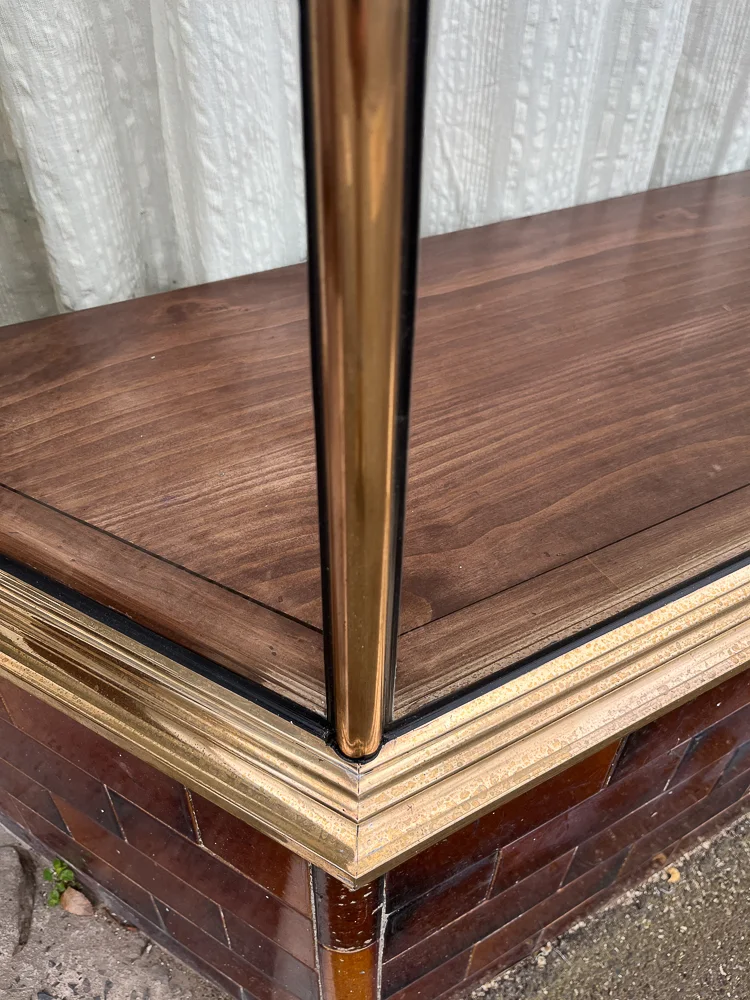
CW&M offers up to 250 standard profiles. Availability and suitability are discussed for the project, so a reference is a starting point for checking the requirement. It should not be taken as confirmation that a particular shape or size is ready to order.
Read the profile in section
A profile is the shape seen when a component is viewed in cross-section. An elevation shows how a moulding sits across a frontage; a section helps explain its depth, returns and relationship to adjoining construction.
If you are sending a sketch, label the visible face and show which way the section is oriented. Mark the dimensions you know and identify anything still to be measured. A drawing can be simple and still useful when it distinguishes confirmed information from an early design intention.
Avoid relying on the apparent scale of a photograph. Perspective can make two similar-looking mouldings appear closer in size than they are.
Describe the visual effect you want
Think about the profile in relation to the whole composition. Is the intention a quiet edge around glazing, a stronger horizontal line or continuity with an existing detail? Show the surrounding window, wall or joinery so the profile can be considered in context.
When using an inspiration image, explain exactly what interests you: the depth of a reveal, the width of a visible face or the way a corner is resolved. That makes the reference more useful than asking for something “the same” without further detail.
For an existing profile, provide both a wider view and a close-up. If a section is already visible, photograph it without disturbing the component.
Show the adjoining construction
A moulding does not sit in isolation. Identify the materials beside and behind it, and include the relevant design details if they are available.
Use the discussion to establish who is coordinating the junctions, fixings, glazing interfaces and any weather-exposed details. These are project-specific matters for the design and installation team; a decorative shape should not be treated as a complete construction solution.
A simple marked-up section can separate the copper component under discussion from work being provided by others.
Keep profile references and quantities organised
Give each proposed profile a reference and use that reference on the drawing, quantity list and photographs. Where a shape repeats in different locations, state whether the lengths and end conditions vary.
A useful schedule can include:
- Your profile reference and drawing revision.
- A section sketch or available standard-profile reference.
- The visible face and orientation.
- Dimensions, with preliminary measurements identified.
- Approximate quantities and required lengths, if known.
- Location in the project and adjoining materials.
- Finish preferences and any existing detail to be considered.
Required lengths are information for checking the scope; confirm what can be supplied before finalising the schedule.
Discuss appearance with the shape
Colour and surface appearance deserve their own note in the brief. If you are referring to existing copper, include photographs taken in clear light and explain which elements will remain alongside the new work.
Our guide to copper patina and weathering explains why a reference photograph is not a promise of a fixed future colour. Ask what finish information or representative samples can be provided for the profile being considered.
From a reference to an enquiry
You do not need a completed technical schedule to make contact. Send the drawings, references or photographs you have, along with your project location and the questions you would like to resolve.
Read about CW&M’s copper mouldings or prepare a mouldings enquiry. CW&M is based in Melbourne and offers delivery Australia-wide; installation scope is discussed separately for each project.
Discuss the next detail